BATTERI
Bridging Academic Training Through Experiential Research And Innovation
About the Program

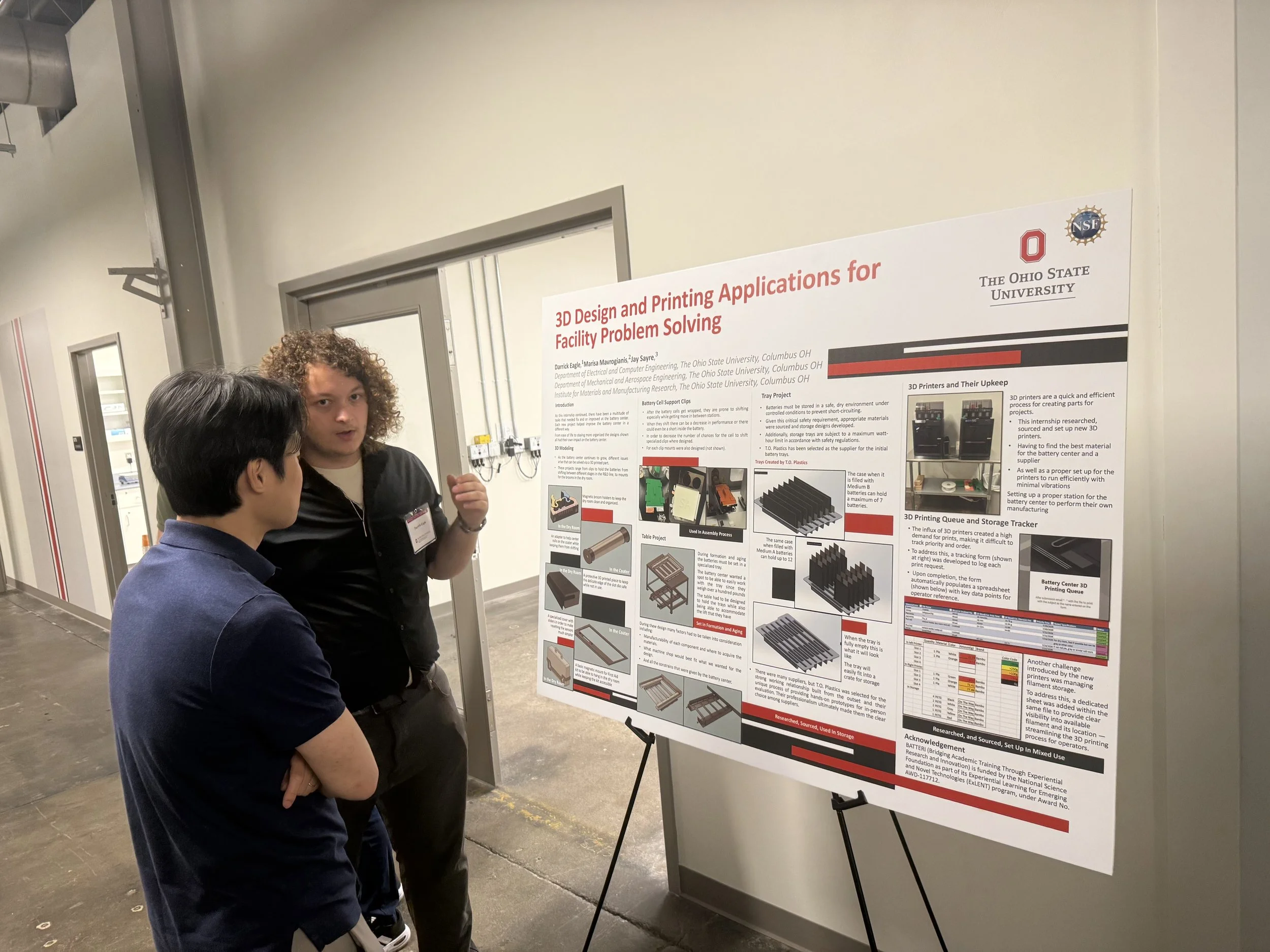
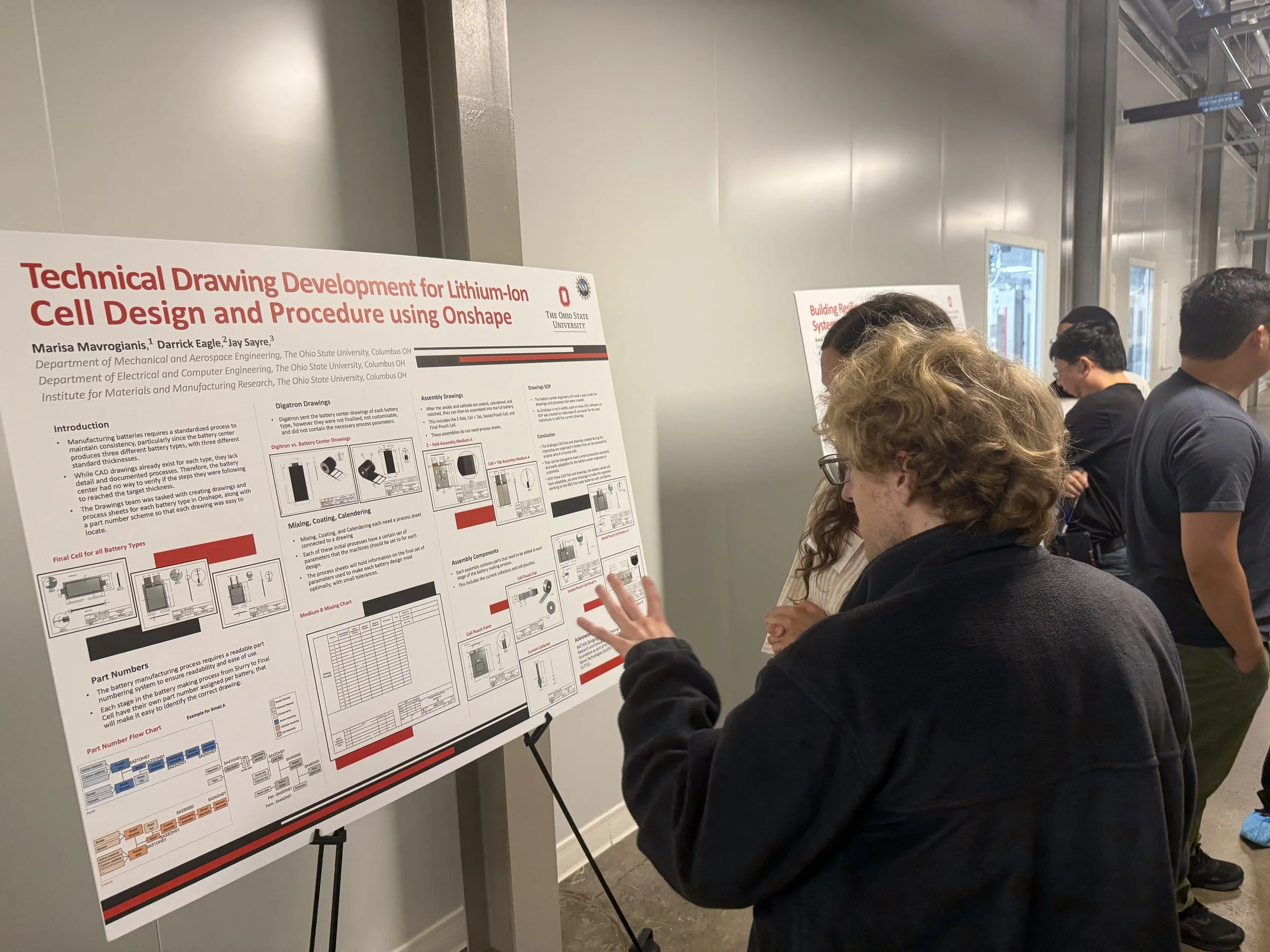
The Bridging Academic Training Through Experiential Research and Innovation (BATTERI) program at OSU provides hands-on training for students and professionals in the rapidly growing clean-tech battery industry. Through a 10-week program, participants gain technical skills, industry insights, and entrepreneurial experience while working on real-world projects in state-of-the-art battery labs. The program offers mentorship, access to cutting-edge technology, and valuable industry connections, preparing students for careers in battery and electric vehicle manufacturing. Supported by the U.S. National Science Foundation (NSF), BATTERI plays a key role in advancing clean energy innovation.
Partner schools for this project include Columbus State Community College and Wilberforce University. For more details, visit: https://imr.osu.edu/experiential-learning/batteri
Expected Learning Outcomes
-
Participants will:
Innovate to find solutions to difficult and ever changing challenges of battery manufacturing.
Acquire the skills to work in a clean tech battery manufacturing environment.
Design forward-thinking battery manufacturing solutions.
-
Participants will:
Develop the language needed to articulate and communicate their selected disciplinary perspective as it relates to advanced battery manufacturing.
Understand theories and principles of entrepreneurship and customer discovery, market analysis and customer segmentation, customer analysis and positioning, and customer ecosystem mapping as each relates to advanced battery manufacturing.
Integrate information across topics and tasks related to advanced battery manufacturing,
-
Participants will:
Develop interest in entering the advanced battery manufacturing workforce.
Develop confidence to enter the advanced battery manufacturing workforce.
Acquire skills necessary to be competitive in the advanced battery manufacturing workforce.

BATTERI Evaluation Activities

Initial Survey: Establishes participants’ baseline capacities before the program begins.
Goal Setting: Allows participants to articulate personal and professional goals to guide their engagement in the program.
Focus Group: Collects shared reflections on participants’ experiences and program dynamics through group discussion in the mid of the program.
Individual Interview: Provides in-depth insights into participants’ individual experiences, perceptions, and developmental trajectories.
Post-Program Survey: Assesses immediate changes in outcomes following completion of the program.
End of Year Survey: Examines the sustainability of program /institution impacts over a longer time frame.

Publications and Presentations
Print Pieces
Bishoff, R (2026, March) BATTERI Program Powers New Opportunities, Student Careers In Next-generation Battery Manufacturing
Huson, M (2025, December) BATTERI offers its first cohort of interns clean tech industry insight and hands-on lab experience.
Presentations and Papers
Gill-Morris. A, Weng, Y. & Mayhew M. J. (2025, November). Students Career readiness: Experiences in a STEM experiential innovation training program. Paper Presentation presented at Association for the Study of Higher Education, Denver, CO, United States.
Weng, Y. Creamer, E., Sayre, J. & Gardner, J. & Mayhew M. J. (2026, June). From Design Intentions to Student Sense making: Entrepreneurial Mindset in an Experiential STEM Learning Environment. Paper Presentation at American Society for Engineering Education.